








There is a version of marketing that still assumes a 30-second ad, placed in front of enough eyeballs, will move product. Gen Z did not just stop believing that story — they built an entirely different one, and brands are now scrambling to catch up.
Gen Z now makes up close to a quarter of the world’s population, and their combined spending power is on a trajectory toward the tens of trillions of dollars within the next decade. That alone would make them worth paying attention to. What makes them genuinely disruptive is how they’ve rewired the relationship between brands, media, and trust — and creators sit at the center of almost every part of it.
Trust Has Changed Owners
For decades, brand trust flowed through institutions: networks, celebrities, glossy campaigns. Gen Z has quietly moved that trust somewhere else entirely — to individual creators, many of whom have a few thousand followers rather than a few million.
Micro-influencers now earn several times more trust than celebrities among Gen Z audiences, and creator recommendations convert at roughly three times the rate of traditional paid ads. About half of Gen Z say they feel a stronger personal connection to creators than to TV personalities. Traditional celebrity endorsement, the format that anchored marketing for generations, simply doesn’t carry the same weight anymore.
This isn’t a preference for smaller numbers for their own sake. It’s a preference for proximity. A creator who responds to comments, shows their actual life, and occasionally gets something wrong reads as real in a way a polished celebrity spot never will.
Social Platforms Are the New Search Engines
Gen Z isn’t waiting for a Google result to tell them what’s good. A large share of Gen Z now start product research directly on TikTok, Instagram, or YouTube rather than a traditional search engine — platforms where creators, not brands, control the narrative.
This changes where marketing dollars actually need to go. It’s no longer enough to win a search ranking or a media placement. Brands now need to already exist inside the conversations creators are having, because that’s where discovery happens before a purchase decision is even made consciously.
Content That Doesn’t Look Like an Ad, Wins
Gen Z can spot a traditional ad and disengage from it within seconds — several studies now put that window at under two seconds. At the same time, the majority of Gen Z say they actively prefer ads that feel like regular content rather than obvious promotion.
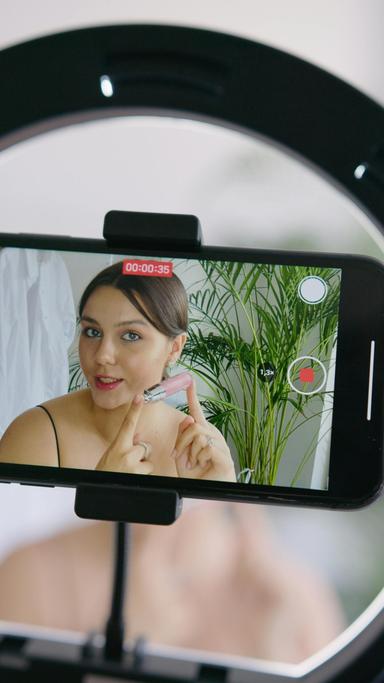
That single tension explains most of the creator economy’s growth. A creator partnership doesn’t feel like an interruption because it’s embedded in a format Gen Z already trusts: a real person, talking in their own voice, inside content that would exist whether or not a brand paid for it. Native, feed-first, short-form video isn’t a nice-to-have anymore — for this audience, it’s close to the only format that reliably works.
Values Aren’t a Campaign, They’re Retention Infrastructure
One of the more uncomfortable findings for brands: Gen Z doesn’t treat a company’s values as a marketing angle, they treat it as a loyalty condition. A meaningful share say they’ve dropped a brand entirely after a values misalignment, and a similar share say they trust brands more when those brands communicate openly, year-round — not just during an awareness push.
Creators are, again, the mechanism through which this plays out. A brand’s values are far more credible coming from a creator’s ongoing, everyday content than from a single campaign statement, because the audience has already spent months or years calibrating how much to trust that specific person.
The Real Shift: From One-Off Deals to Ongoing Relationships
Perhaps the most important structural change isn’t about content format at all — it’s about deal structure. Roughly half of Gen Z say they feel more connected to brands that work with the same creators repeatedly, rather than rotating through a new face every campaign. Consumers can tell the difference between a creator who genuinely uses a product over time and one who’s clearly on their third unrelated sponsorship this month — and they penalize the latter, sometimes losing interest in a product entirely if it’s promoted by too many different people in a short window.
This is pushing brands toward something that looks less like a media buy and more like a relationship: fewer creators, deeper partnerships, longer time horizons. It’s a better outcome for audiences, and — when the economics are structured fairly — a much better outcome for creators too.
What This Means If You’re the One Getting the Brand Deal
Everything above is usually framed from the brand’s side of the table. But if you’re the creator this entire shift is being built around, the same trends create a very different kind of pressure.
If brands increasingly want fewer, deeper, longer-term relationships instead of one-off posts, that means creators need to actually know what an ongoing partnership is worth — not just what a single post pays. It means the old habit of accepting whatever a brand offers, because some money felt better than none, doesn’t hold up anymore when data on your actual market value is available and brands expect you to know it too.
It also means cash flow becomes a real business problem, not a minor inconvenience. Long-term brand relationships often come with longer payment cycles, and a creator juggling multiple ongoing partnerships needs the same financial infrastructure any other growing business would expect — visibility into what’s owed, when it lands, and what it’s actually worth.
That’s a big part of why tools built specifically for creators — rather than generic freelancer or small-business software — have started to matter as much as the content itself. Knowing your market value, understanding what a brand deal is genuinely worth before you say yes, and not waiting 60 or 90 days for a payment to clear are no longer nice-to-haves. They’re the operational backbone that lets a creator treat this as the business it’s actually become.
The Takeaway
Gen Z didn’t reject marketing. They rejected the version of marketing that talked at them instead of existing among them. Creators became the bridge — not because they’re cheaper than traditional advertising, though they often are, but because they’re the only format this generation has consistently agreed to trust.
For brands, that means treating creator partnerships as relationship infrastructure, not a campaign line item. For creators, it means the business side of the job — knowing your worth, managing the cash flow, treating the partnership like the asset it is — matters just as much as the content itself.
Sources: Hootsuite Gen Z Statistics 2026; NEWMEDIA.COM Gen Z Marketing Statistics; RevenueMemo Gen Z Marketing Analysis 2026; Zebracat Gen Z Marketing Statistics 2026; eMarketer FAQ on Gen Z 2026; Affinco Gen Z Marketing Statistics 2026.